


Pozvané prednášky
Jaroslav Fabian - Electrons in Flatland: The Physics of Two-Dimensional Materials
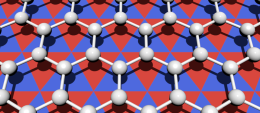
Abstrakt: Since graphene was first peeled from graphite with adhesive tape, atomically thin crystals have become one of physics' most exciting frontiers. In these materials, electrons are confined to a single plane, where they can behave as massless relativistic particles, acquire topological properties, or organize into exotic collective states. Because the layers are held together only by weak van der Waals forces, they can be stacked, strained, and twisted like building blocks, creating designer materials not found in nature. A twist of just one degree, for example, can turn a metal into a superconductor. I will take the audience through this fascinating landscape, highlighting recent developments in engineering quantum matter where physics meets elegant mathematics. These developments may open the way to new forms of computation, from post-silicon transistors to topological quantum computing.
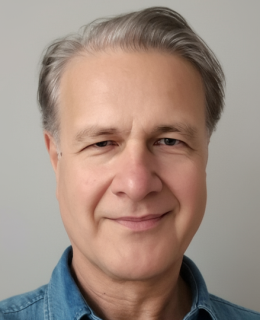
Bio: Jaroslav Fabian vyštudoval fyziku na Katedre teoretickej fyziky FMFI UK (1990). Doktorát z fyziky získal na State University of New York v Stony Brook (1997). Ako postdoc pôsobil v skupine prof. Sankara Das Sarmu na University of Maryland v USA a ako Distinguished Postdoctoral Fellow v Inštitúte Maxa Plancka pre fyziku komplexných systémov v Drážďanoch. Neskôr pôsobil ako docent na Univerzite v Grazi. Od roku 2004 je profesorom teoretickej fyziky na Univerzite v Regensburgu, kde vedie výskumnú skupinu spintroniky. Je predsedom rady spoločného výskumného centra SFB 1277 a členom klastra excelentnosti Center for Chiral Electronics. Patrí medzi popredných svetových odborníkov v spintronike. Venuje sa spinovým javom v nanoštruktúrach, najmä v dvojrozmerných materiáloch a Van der Waalsovych heteroštruktúrach.
Igor Farkaš - Humanoids Sharing Our World: How Should a Robot Learn?
Abstrakt: Humanoid robots are moving from laboratories into increasingly human environments, raising a fundamental question: how should they acquire the intelligence needed to share our world? One increasingly popular approach is to give robots access to large language and multimodal models, allowing them to inherit vast amounts of knowledge through language. An alternative, inspired by human cognitive development, is to let robots gradually acquire knowledge through embodied interaction with the physical and social world. In the talk, I will contrast these two approaches from an interdisciplinary perspective.
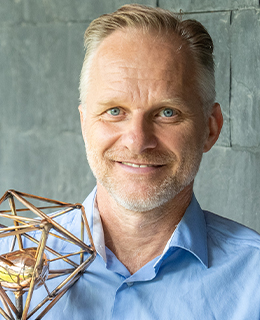
BIO: Igor Farkaš vyštudoval technickú kybernetiku na FEI STU, kde získal aj doktorát z aplikovanej informatiky. Pôsobil ako postdoc na University of Richmond, Virgínia, USA a na Saarland university v Saarbrueckene, Nemecko. Na fakulte pôsobí od roku 2003. Je dlhoročným garantom medzinárodného interdisciplinárneho programu kognitívna veda. Pôsobil aj ako vedúci Katedry aplikovanej informatiky. V ostatných rokoch bol zodpovedným riešiteľom úspešného twinning projektu Horizontu Európa (TERAIS). V roku 2024 získal dve ocenenia: vedec roka v kategórii Osobnosť medzinárodnej spolupráce za rok 2023, a ESET Science Award v kategórii Výnimočná osobnosť vysokoškolského vzdelávania. Výskumne sa pohybuje v oblastiach subsymbolovej umelej inteligencie a kognitívnej robotiky.