


Keynotes
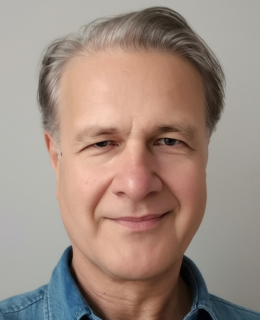
Jaroslav Fabian - Electrons in Flatland: The Physics of Two-Dimensional Materials
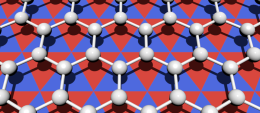
Abstract: Since graphene was first peeled from graphite with adhesive tape, atomically thin crystals have become one of physics' most exciting frontiers. In these materials, electrons are confined to a single plane, where they can behave as massless relativistic particles, acquire topological properties, or organize into exotic collective states. Because the layers are held together only by weak van der Waals forces, they can be stacked, strained, and twisted like building blocks, creating designer materials not found in nature. A twist of just one degree, for example, can turn a metal into a superconductor. I will take the audience through this fascinating landscape, highlighting recent developments in engineering quantum matter where physics meets elegant mathematics. These developments may open the way to new forms of computation, from post-silicon transistors to topological quantum computing.
Bio: Jaroslav Fabian studied physics at the Department of Theoretical Physics, Faculty of Mathematics, Physics and Informatics, Comenius University in Bratislava (1990). He received his PhD in Physics from the State University of New York at Stony Brook (1997). He worked as a postdoctoral researcher in Prof. Sankar Das Sarma’s research group at the University of Maryland, USA, and as a Distinguished Postdoctoral Fellow at the Max Planck Institute for the Physics of Complex Systems in Dresden. Later, he served as an Associate Professor (Docent) at the University of Graz. Since 2004, he has been a Professor of Theoretical Physics at the University of Regensburg, where he leads the spintronics research group. He is the chairman of the board of the Collaborative Research Center SFB 1277 and a member of the Cluster of Excellence Center for Chiral Electronics. He is among the world's leading experts in spintronics, focusing on spin phenomena in nanostructures, particularly in two-dimensional materials and van der Waals heterostructures.
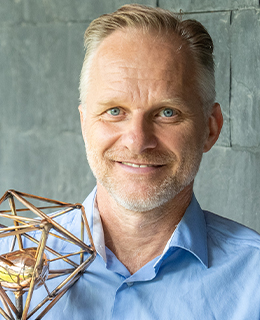
Igor Farkaš - Humanoids Sharing Our World: How Should a Robot Learn?
Abstract: Humanoid robots are moving from laboratories into increasingly human environments, raising a fundamental question: how should they acquire the intelligence needed to share our world? One increasingly popular approach is to give robots access to large language and multimodal models, allowing them to inherit vast amounts of knowledge through language. An alternative, inspired by human cognitive development, is to let robots gradually acquire knowledge through embodied interaction with the physical and social world. In the talk, I will contrast these two approaches from an interdisciplinary perspective.
BIO: Igor Farkaš studied technical cybernetics at the Faculty of Electrical Engineering and Information Technology (FEI) of the Slovak University of Technology (STU), where he also earned his doctorate in applied informatics. He held postdoctoral positions at the University of Richmond (Virginia, USA) and Saarland University (Saarbrücken, Germany). He has been a faculty member since 2003 and has long served as the program director for the international interdisciplinary master's program in cognitive science. He also served as the Chair of the Department of Applied Informatics. In recent years, he has been the principal investigator of a sucessful Horizon Europe twinning project (TERAIS). In 2024, he received two awards: Scientist of the Year in the "International Cooperation Personality" category (for 2023) and the ESET Science Award in the "Outstanding Personality of Higher Education" category. His research spans the fields of subsymbolic artificial intelligence and cognitive robotics.