


Keynotes
Andrej Zlatoš - Fluid Dynamics in Porous Media
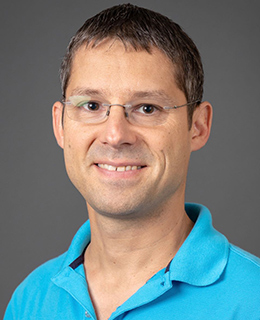
Abstract: The motion of fluids is modeled by various systems of partial differential equations, depending on the properties of the fluid, the medium through which it moves, or the space-time scales on which the motion is studied. I will start by discussing two of the most fundamental of these models: the 2D Euler equations modeling motions of ideal fluids, and the incompressible porous media equation (IPM) for fluids in porous media such as oil or ground water in an aquifer. These are also some of the most elementary fluid models because they can each be re-stated as a single scalar transport equation for either the vorticity or the density of the fluid. Nevertheless, their analysis is far from elementary due to non-local dependence of the transporting velocity on the transported quantity. In the second part of the talk I will present a recent result that shows development of finite time singularities for the two-fluid IPM. It is based on the observation that for a large class of initial data, certain physically relevant quantities - the maximal slope of the interface between the two fluids as well as the potential energy of the system - always decrease in time.
Bio: Andrej Zlatos received his master's degree in mathematics from our faculty in 1999. After his doctoral studies at the California Institute of Technology in 2003, he worked at the University of Wisconsin and the University of Chicago, and from 2016 on, he became a professor at the University of California in San Diego. He focuses on the area of partial differential equations with specialisation in the dynamics of liquids, the theory of mixing and reaction-diffusion equations. For his research he received multiple awards, including the Sloan Fellowship and the Simons Fellowship.
Zuzana Kubincová - Research into pedagogical forms to support active learning
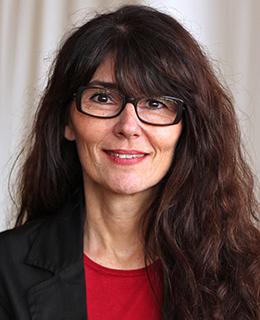
Abstract: One of the key challenges in contemporary education is how to meaningfully engage students in the learning process. Teachers at all levels of education, including university, often encounter declining motivation, fragmented attention, and passive study habits among students. The current young generation has grown up in an environment saturated with technology, instant access to information, and constant online interaction. Although these characteristics bring new opportunities for creativity and collaboration, they also appear to have a negative impact on, for example, the ability to maintain attention, read longer texts, and so on. The learning styles of this generation differ significantly from those of previous generations, and it is necessary to provide more support to motivate them to learn.
We will present our research on pedagogical forms that support active learning, which emphasizes participation, problem solving, discussion, and reflection rather than the mere transfer of information. We will look at strategies such as collaborative learning, team-based projects, peer assessment, and others, as well as how these methods can be adapted to the cognitive and motivational profiles of today's students.
The goal is to highlight how thoughtful instructional design – supported by research – can engage students in the learning process as co-creators of their educational experiences and, instead of passively receiving information, encourage their curiosity, autonomy, and deeper understanding.
Bio: Zuzana Kubincová is a professor at the Department of Mathematics, Physics, and Computer Science Education at our faculty, where she educates pre-service as well as in-service informatics teachers. The courses she teaches include Programming, Algorithms and Data Structures, Database Principles, and others. Her pedagogical research focuses on areas such as collaborative learning, , gamification, new forms of assessment, and others. She is an active member of the international community in this field, has co-organized several international conferences, and is a co-founder and long-time organizer of the international Peer review, peer assessment and self-assessment workshop.