


Keynotes
Michal Valko – Gamification of Large Language Models
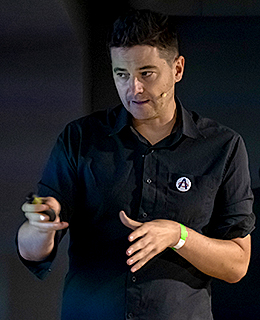
Abstract: Reinforcement learning from human feedback (RLHF) is a go-to solution for aligning large language models (LLMs) with human preferences; it passes through learning a reward model that subsequently optimizes the LLM's policy. However, an inherent limitation of current reward models is their inability to fully represent the richness of human preferences and their dependency on the sampling distribution. In the first part we turn to an alternative pipeline for the fine-tuning of LLMs using pairwise human feedback. Our approach entails the initial learning of a preference model, which is conditioned on two inputs given a prompt, followed by the pursuit of a policy that consistently generates responses preferred over those generated by any competing policy, thus defining the Nash equilibrium of this preference model. We term this approach Nash learning from human feedback (NLHF) and give a new algorithmic solution, Nash-MD, founded on the principles of mirror descent. NLHF is compelling for preference learning and policy optimization with the potential of advancing the field of aligning LLMs with human preferences. In the second part of the talk we delve into a deeper theoretical understanding of fine-tuning approaches as RLHF with PPO and offline fine-tuning with DPO (direct preference optimization) based on the Bradley-Terry model and come up with a new class of LLM alignment algorithms with better both practical and theoretical properties. We finish with the newest work showing links between and building on top of them.
Jiří Šilha – Astronomy meets industry
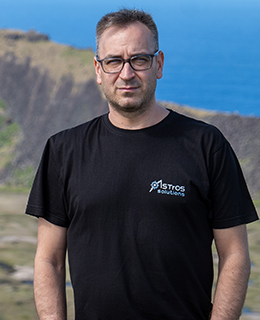
Abstract: Astronomy is commonly associated with basic research. This scientific discipline produces experts in the field of research on small bodies of the solar system, solar physics, galactic astrophysics and the like. However, the scientific methods and instruments used during astronomical research also have a practical application from the point of view of planetary defense and prevention of collision of satellites with space debris. This application is of direct interest to the European Space Agency (ESA), which strongly supports development and research in this area. Thanks to ESA, a specific type of industry dedicated to space safety has been established in Slovakia. The contribution will be devoted to the topics of space safety, the role of the academy and industry in this area and the opportunities created for students and new professions in Slovakia.